
Choosing the right running/walking shoe for you!
Do your feet hurt during your morning jog or evening walks around the neighborhood? Does your calf, knee or hip hurt every time you get a mile into your run? As a runner or distance walker, choosing the right pair of shoes can be the difference in developing a running/walking injury versus having an enjoyable, injury-free trip. Many people assume that comfort when trying on shoes in the store is the best way to choose a shoe. While comfort level is part of the process in choosing the right shoe, there are many other factors one should consider before making the final decision.
The first thing to determine when choosing the right shoe is the level of support you need. Most reputable running shoe companies will provide many different styles of shoes with different levels of support to accommodate their customers. You will generally have 4 levels of support to choose from; minimalist, neutral, moderate support, and maximum support. The salesperson should be able to tell you what level of support each shoe provides. If they are unable to provide this information, you need to find a different salesperson or move on to the next store. The best way to determine the level of support needed is by looking at your arches while standing with your feet separated about 6-8 inches. Those with flat feet, where the arch is diminished or non-existent, require a shoe with moderate to maximum support depending upon body weight and how far your arches have fallen. Those of you with normal to high arches do not need as much support because you already have plenty of support that comes from the natural cantilever provided by your arch. Thus, a neutral shoe is ideal for those of you with normal to high arches.
After determining the level of support that is best suited for your feet, determining the quality of the shoe structure and design is paramount. Making this determination is done in 3 steps. The first step is to make sure the sole of the shoe has the proper combination of stability and mobility to allow your foot to bend at the toes when pushing off as you propel your body forward. A properly designed shoe will allow the toes (especially the big toe) to extend back in the proper fashion while providing support to the remaining portion of the foot. To test this combination, hold the shoe at the heel with the toes pointed down to a flat surface. Gently press the shoe into the ground and see where the shoe breaks down. A properly designed shoe will stop breaking down at the point where the toes meet the body of the foot just in front of the arch. See Fig 1.

A poorly designed shoe will break down completely into the midportion or arch of the shoe (see Fig 2) causing excessive stress on the midfoot.

The next test to perform on the shoe tests the medial and lateral support of the shoe which helps with your balance. This test involves twisting the shoe in both directions while holding the sides of the toe box with one hand and the heel of the shoe without your other hand. A quality shoe will give just a bit but should resist the twisting motion in both directions. A poorly constructed shoe will rotate excessively in on or both directions See Fig 3 and 4.


If the shoe passes both of these tests, it’s time to check to see if the shoe has any more defects. Even good quality designed shoes can have defects. Some estimates say roughly 5% of shoes will come out of the factory with a defect of some sort despite inspections. The most common defect is in the sole of the shoe which can be uneven on the horizontal axis. To check for this defect, place the shoe on a level surface. Looking from the back of the shoe (looking from the heel forward) at eye level, place your index finger on the outside edge of the heel tab and gently press down. See Fig 5.

Each shoe should move slightly or not a all but, most importantly, should be symmetrical. If any excessive wobbling or asymmetry is noted, the shoe is defective and could likely cause you to develop a running/walking injury. I have had several patients in my 22 years as a physical therapist that developed knee, hip, or ankle pain while running or walking that was a direct result of this type of defect.
Now it’s time to try on the shoe. A few factors should be taken into consideration before making your final decision. Obviously, the main factor is comfort. You must note whether the shoe crowds your toes, midfoot, or heel. Does the shoe provide an adequate balance of cushion and support for your entire foot? Also, determine whether or not the sole of the shoe provides full coverage of your entire foot. A common error I see clients make is purchasing shoes in which the sole does not provide full coverage of the midfoot, heel, and arch. If your foot is wider than the sole, the shoe will not perform the way it was designed and can lead to foot, knee, hip, or even back pain. If the shoe “checks all the boxes” then it is time to purchase the shoe. However, purchasing the shoe is not the final step in determining if this shoe is the one for you. I always encourage my patients to take the shoes home and wear them in the house or go walk somewhere indoors for a couple of hours and see how the feet respond. I encourage my runners to run 15-20 minutes on the treadmill to see how their feet, knees, and hips respond. Any unusual pain or soreness in these areas indicate the shoe may not be a good fit and should be returned. Mild soreness in the feet is not necessarily a sign of an improper fit and is sometimes simply because the shoes are new and your feet are not used to the support a new shoe provides.
If you develop a running or walking injury or just need a consultation to determine if you have the proper footwear for your feet, come see our Doctor’s of Physical Therapy at First Choice Physical Therapy.
Call today, and let’s get your problem solved! 850-248-1600 – Dr. Brett Frank PT, DPT
Knee Pain
Do you suffer from knee pain during an activity? Have you tried every brace, cream, footwear, and gimmick out there? Are you ready to get better by strategically attacking the cause instead of looking for a quick fix? See our Doctors of Physical therapy, let us perform a detailed assessment to identify your problem, and implement a treatment plan geared towards helping you get where you want to be.
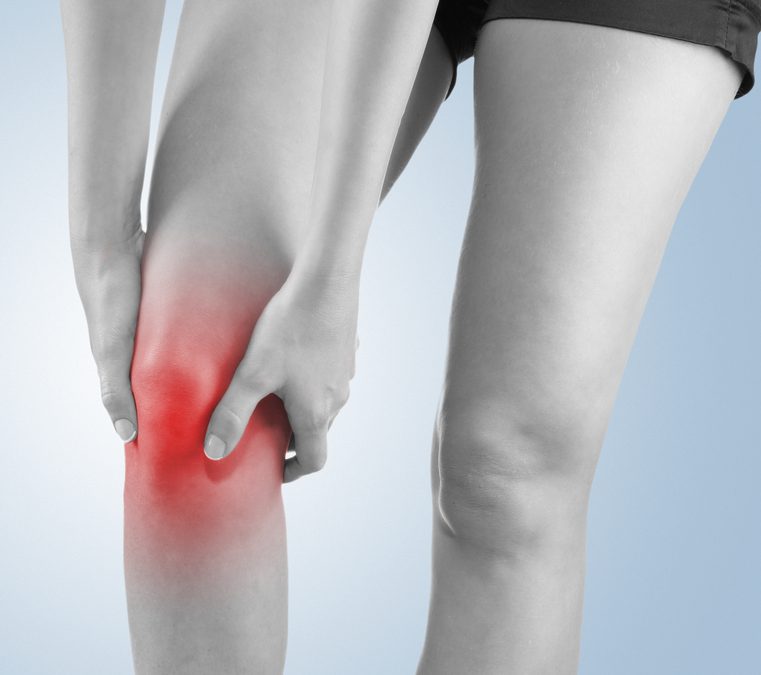 Knee pain is common among all age groups and genders. The pain can be caused by a variety of biomechanical factors that are causing your dysfunction. In fact, knee pain tends to be a multifactorial problem commonly associated with strength deficits throughout the posterior chain (muscles in the back of your leg). These deficits can create an improper angle at the hip in relation to the knee or simply create muscle imbalances with increased shear forces on specific structures of the knee. Our bodies were made to move, and it will find ways to move even if the proper muscles are not being utilized, which creates compensatory movement strategies. If this occurs over a long period of time or through a repeated functional task such as walking, running, or climbing stairs, then these maladaptive movements are magnified, and you can end up with pain.
Another plausible cause to knee pain is the type of footwear and the support it offers in relation to your native anatomy, more specifically, the arch of the foot and position of the heel to the lower leg. Footwear can be a two-sided coin depending on whether the shoe offers too much or too little support. The position of the foot during weight acceptance, mid stance, and push-off are similar to how the angle of the hip affects the knee. It does so by the way the forces are transferred up the chain through the knee.
The big picture here is that many different factors can cause knee pain. Sure, you can have arthritis and tendonitis, but what is the cause of this? How do you know where to start? That’s where the experts at First Choice Physical Therapy come in. Let us analyze your problem so that we can help you get better.
Call today, and let’s get your problem solved! 850-248-1600 – Dr. John Gray PT, DPT
Ice or Heat?
It’s Saturday afternoon and after working in the yard your lower back is sore and tight, what do you do? Do you lie on a heating pad or do you brave the cold and lie on an ice pack? We get asked on a daily basis, “Which is better? Ice or heat?” That is a loaded question. In my opinion, you can never go wrong with ice. Applying ice to the affected tissue will vasoconstrict the blood vessels which will decrease inflammation, numb sore tissues, acting as a local anesthetic, and slows down the pain messages being transmitted to the brain. Ice is also best utilized during the acute phase (0-48 hours after injury) while heat may be best used for chronic pain.
 A good rule of thumb to go by is that you can never go wrong with ice. So after any physical activity, applying an ice pack to the affected area will be your best bet for avoiding increasing pain. If your pain persists or even gets worse, then you may want to come see us and let one of our Doctors of Physical Therapy perform an extensive examination of the injury.
Brannon Chester, DPT
Doctor of Physical Therapy